


Four badges. Four conferences. One meaningful journey.
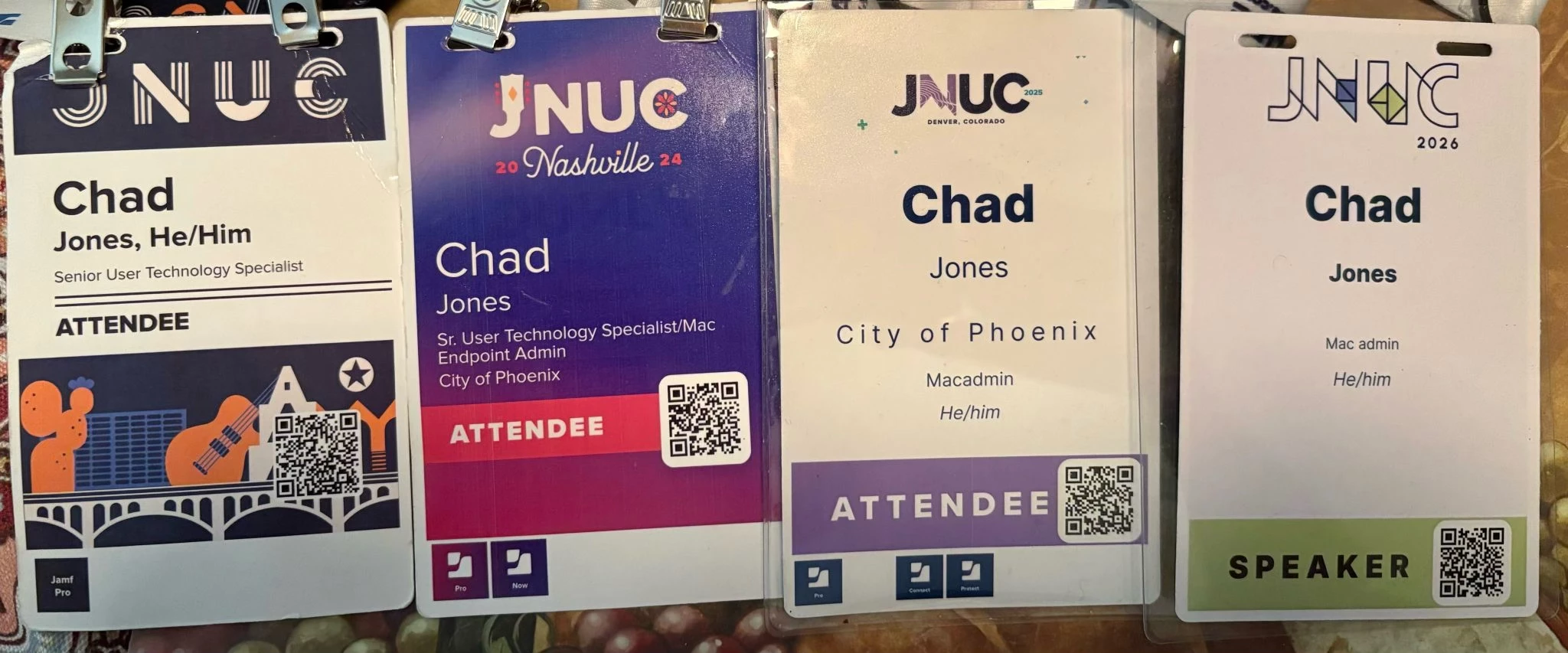
Four years of JNUC—from attendee to speaker.
Being a Mac admin in a long-established Windows enterprise can sometimes be a lonely road.
Policies, security controls, governance and expectations naturally grow around the dominant platform. As a result, people may expect Macs to operate much like Windows PCs.
But macOS is not Windows. It was never meant to be.
When we introduced Apple management through Jamf, I do not think any of us—including me—fully appreciated how many systems would eventually intersect with it. Identity, networking, DNS, endpoint security, CASB, VPN, certificates and other controls all influence the management experience.
That complexity taught me something important: Apple device management is a cross-team discipline. Success requires technical skill, cooperation and a willingness to understand where different systems meet.
Sometimes you are building the very road you are expected to travel.
I certainly did not get everything right. I made mistakes, learned, adapted and kept developing my skills.
Being autistic added another dimension. My communication style, persistence in seeking technical accuracy and willingness to question assumptions have not always translated easily across organizational boundaries. I have room to grow, too. But inclusion is reciprocal. Accommodations matter, and so do listening, understanding and recognizing the value of different perspectives.
When specialized knowledge or encouragement was not readily available around me, I found it through Jamf, Apple and the wider MacAdmins community.
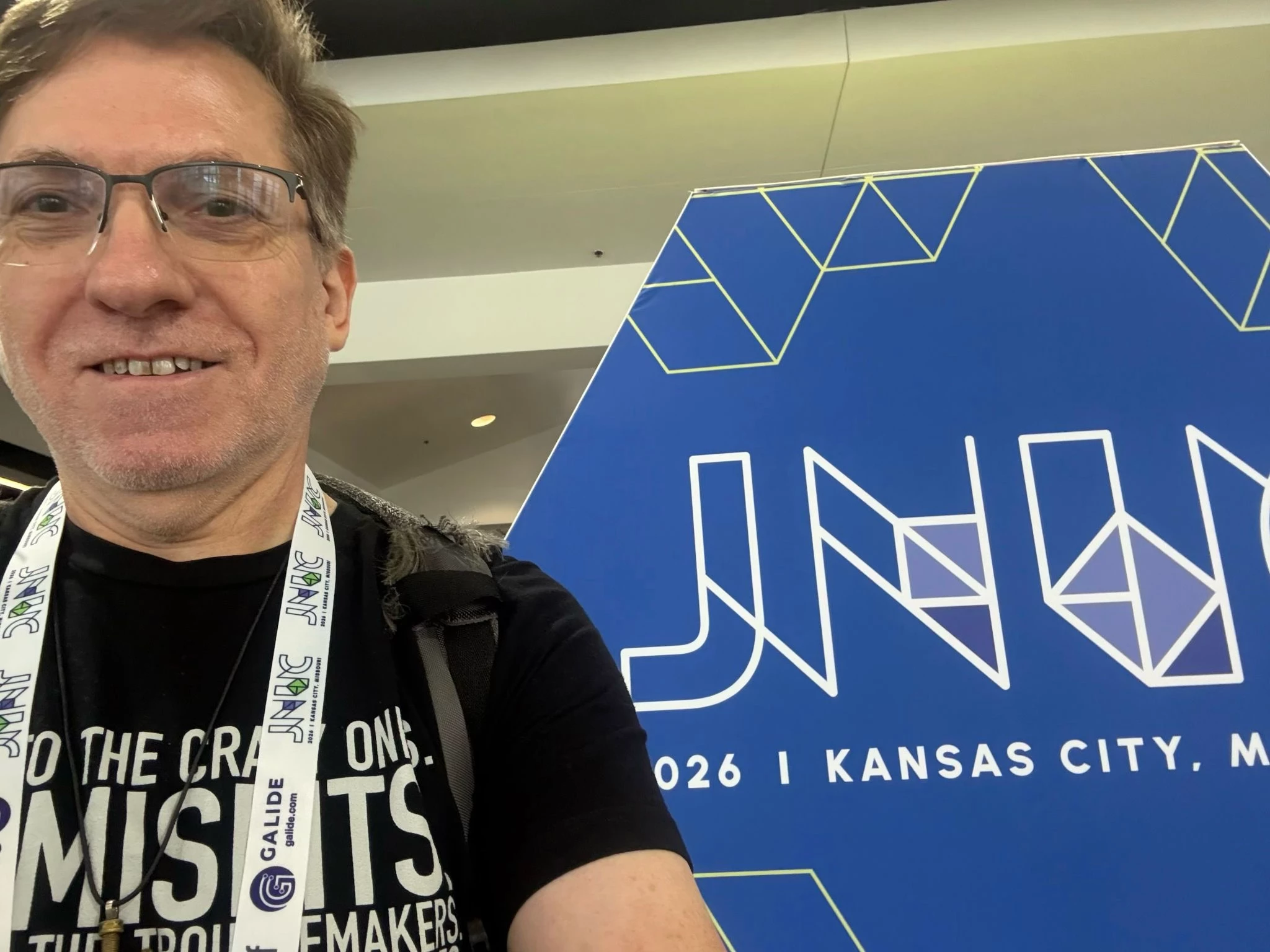
Back at JNUC in Kansas City—this time with a different badge.
That brings me to those four badges.
JNUC has become much more than an annual technical conference. During some difficult professional years, it became a place where I felt seen, heard and understood. It was a place where shared technical interests became professional relationships and, in some cases, genuine friendships.
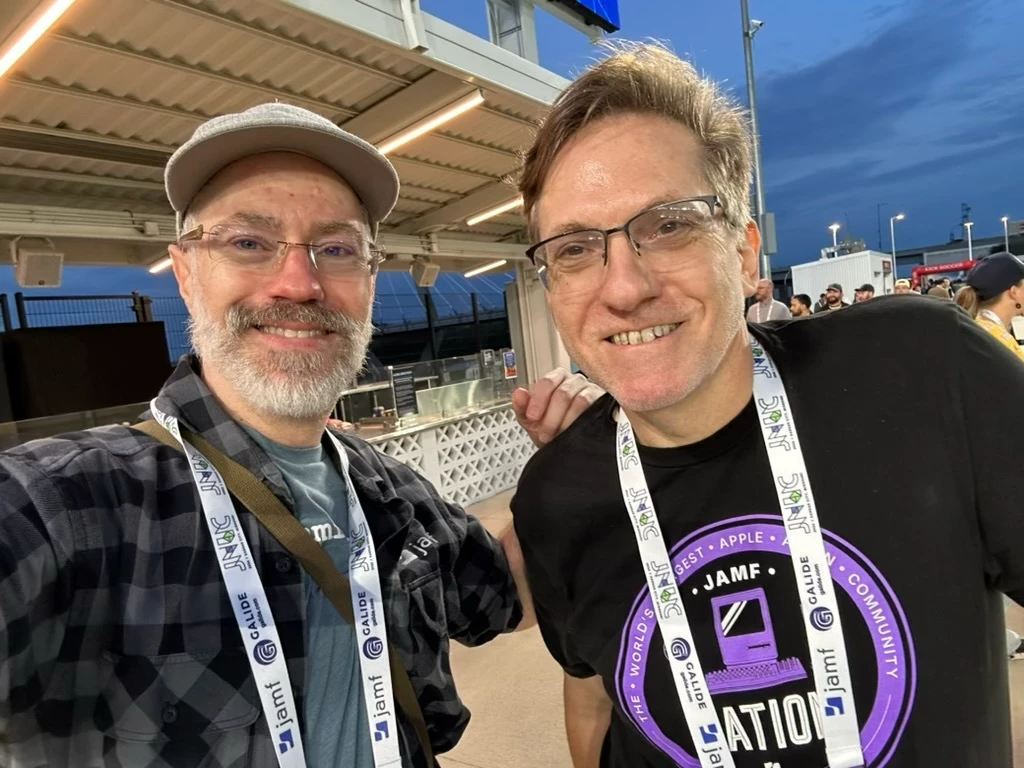
The technology matters. The relationships built around it matter just as much.
This year I had the privilege of moving from attendee to speaker, sharing lessons drawn from years of troubleshooting, investigation, persistence and learning.
But what excites me now is not only where Jamf has been. It is where endpoint management appears to be going.
For years, we talked primarily about device management. I increasingly think we are moving toward state management.
Declarative Device Management is a major part of that shift. Compliance capabilities, Blueprints and richer ways of querying device state all help move administration away from simply issuing commands and toward defining, observing and maintaining the state we expect.
That distinction matters.
I am also interested in what AI can bring to this work—especially when paired with strong AI governance. Used responsibly, AI has the potential to help administrators understand complex environments, identify patterns and reduce repetitive work without replacing the judgment required to manage enterprise systems well.
Infrastructure as Code is another part of the same story. Terraform and Jamf create opportunities to make configuration repeatable, reviewable and automated rather than dependent on manual administration.
Put those pieces together—DDM, compliance, Blueprints, AI, governance, state awareness and IaC—and the direction becomes compelling.
What excites me most is the growing possibility of automated state administration: defining the condition we want on an endpoint, continuously understanding its actual state and using automation to keep the two aligned.
That is a much larger idea than traditional MDM.
And after four JNUCs, that is what continues to excite me: not merely managing devices, but helping build systems that can understand, maintain and protect their intended state.
To Jamf and the MacAdmins community: thank you for the knowledge, the encouragement, the relationships and the opportunity to keep learning.
The road ahead looks interesting.